The Future of LinkedIn Lead Generation: What Will Still Work When Everyone Is Using AI
From automated outreach to predictive analytics and AI-generated content, the tools reshaping acquisition, engagement, and conversion are evolving rapidly. Yet as AI saturates professional networks like LinkedIn, the question isn’t whether AI will change lead generation — it’s how we make lead gen strategies future-proof in a world where everyone can generate outreach at scale.
In this article, I’ll share insights into what gets commoditized, what becomes more valuable, and where human advantage remains unmatched — even with widespread AI adoption. You’ll walk away with frameworks that help position your business for sustainable growth, not temporary automation wins.
AI Saturation — The Rules of the Game Are Changing
AI adoption in marketing and sales is no longer experimental.
According to McKinsey, over 65% of organizations now regularly use generative AI. (McKinsey Global Survey, 2024). In sales and lead generation specifically, HubSpot reports that 75% of sales professionals already use AI tools to assist with prospecting, outreach, or follow-ups (HubSpot State of AI, 2024). As of right now, the number is probably even higher.
On LinkedIn, this has led to a predictable outcome:
- More messages
- More automation
- More “personalized” outreach that doesn’t feel personal
- And less attention per message
When everyone gains access to the same tools, advantage shifts away from tools and toward judgment.
This is where most companies get it wrong.
They ask: “Which AI tool should we use?”
Instead, the real question is: “What will still work when everyone uses AI?”
What Gets Commoditized First
AI doesn’t eliminate lead generation — it commoditizes the easiest parts of it.
1. Generic Outreach Messaging
AI is exceptionally good at producing:
- Polite intros
- Industry-specific buzzwords
- Surface-level personalization (“Saw you’re the CEO of…”)
But that’s exactly the problem.
When everyone uses similar prompts, everyone sounds the same.
LinkedIn inboxes are already filled with:
- Over-polished messages
- Perfect grammar
- No real point of view
According to Gartner, by 2026, 80% of B2B sales outreach messages will be AI-generated, making differentiation via wording alone nearly impossible (Gartner Sales Technology Forecast, 2024).
Result:
Messaging becomes background noise.
2. Volume-Based Prospecting
AI makes it easy to scale:
- Connection requests
- Follow-ups
- Multi-step sequences
But scale without relevance backfires.
LinkedIn itself has acknowledged this shift. In internal guidance shared with advertisers and creators, the platform has emphasized “relevance and signal quality over activity volume”, especially as automation increases.
In short:
More activity ≠ more opportunity
High-volume outreach becomes cheap.
High-quality attention becomes rare.
3. Basic Personalization
First-name tokens.
Company mentions.
Job title references.
These used to feel thoughtful.
Now they feel automated.
A Salesforce study found that 72% of buyers can now easily identify AI-generated or automated sales messages, and trust drops significantly when messages feel templated (Salesforce State of the Connected Customer, 2024).
Once buyers can detect automation, its persuasive power collapses.
What Becomes More Valuable in an AI-Saturated LinkedIn
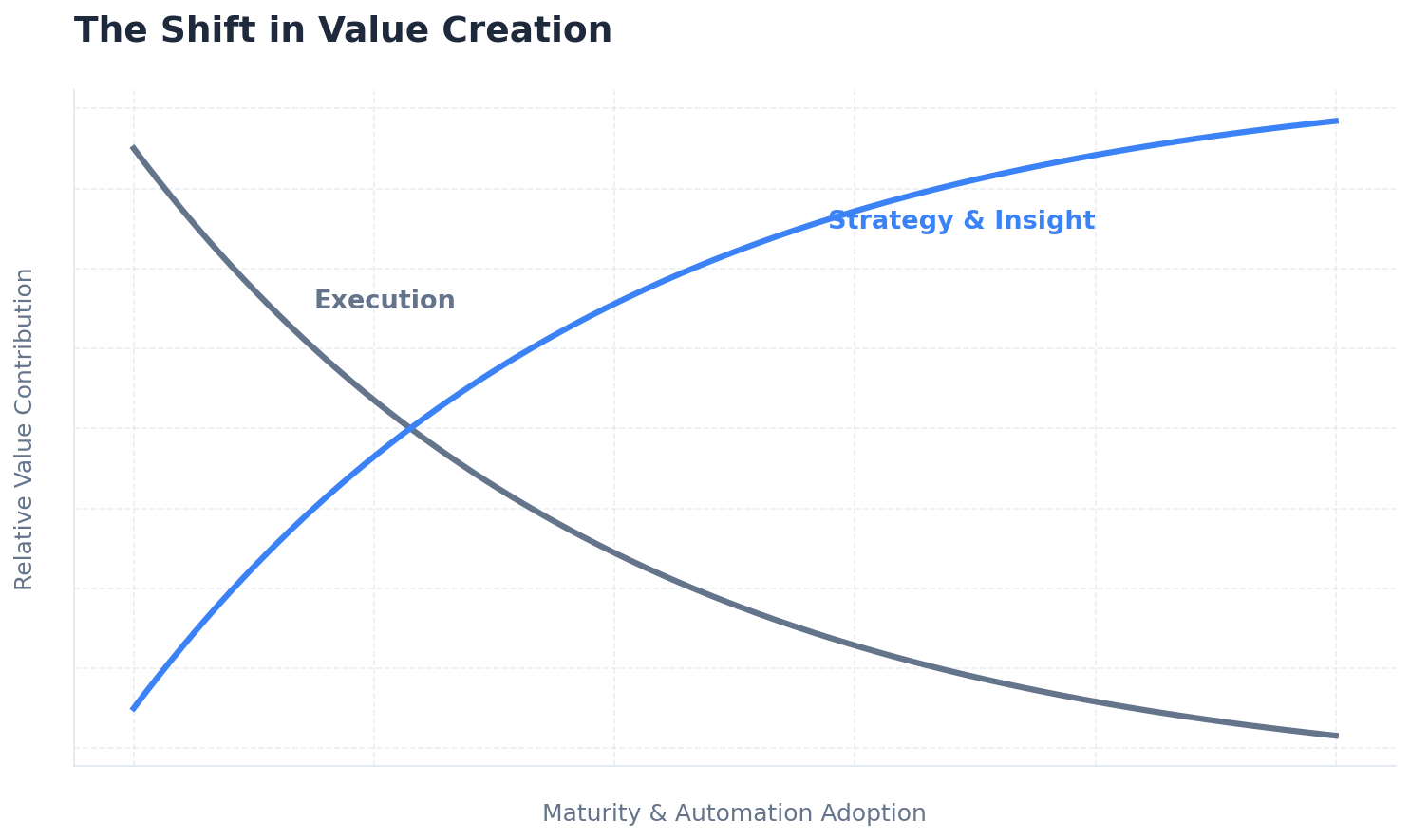
As execution gets cheaper, thinking gets more expensive.
1. Positioning Beats Messaging
When everyone can write messages, what you say matters less than where you stand.
Positioning answers:
- Why you?
- Why now?
- Why this approach?
AI can generate content.
It cannot define your strategic narrative.
This is why personal branding and thought leadership outperform cold outreach in the long run. According to LinkedIn’s B2B Institute, brands and individuals who invest in long-term authority-building see up to 2x higher conversion rates compared to short-term demand capture tactics.
In the future: Your content warms the lead before your message ever arrives.
2. Deep ICP Understanding
AI can segment audiences.
It cannot understand nuance without human direction.
Future-proof lead gen requires:
- Knowing what your ICP won’t respond to
- Understanding internal politics, fears, and incentives
- Recognizing buying triggers AI cannot infer from profiles
According to Forrester, top-performing B2B organizations are 2.5x more likely to invest in qualitative customer research, not just data enrichment tools.
This is where agencies win:
Not by sending more messages — but by sending smarter ones.
3. Original Insight (Not Content)
AI aggregates what already exists.
Authority comes from saying what others won’t.
That means:
- Contrarian takes
- Real client patterns
- Lessons learned the hard way
The Edelman Trust Barometer shows that expert-led, experience-based content is trusted 3x more than generic educational content.
This is why “how-to” posts are declining in effectiveness — and point-of-view content is rising.
Where Human Advantage Remains Irreplaceable
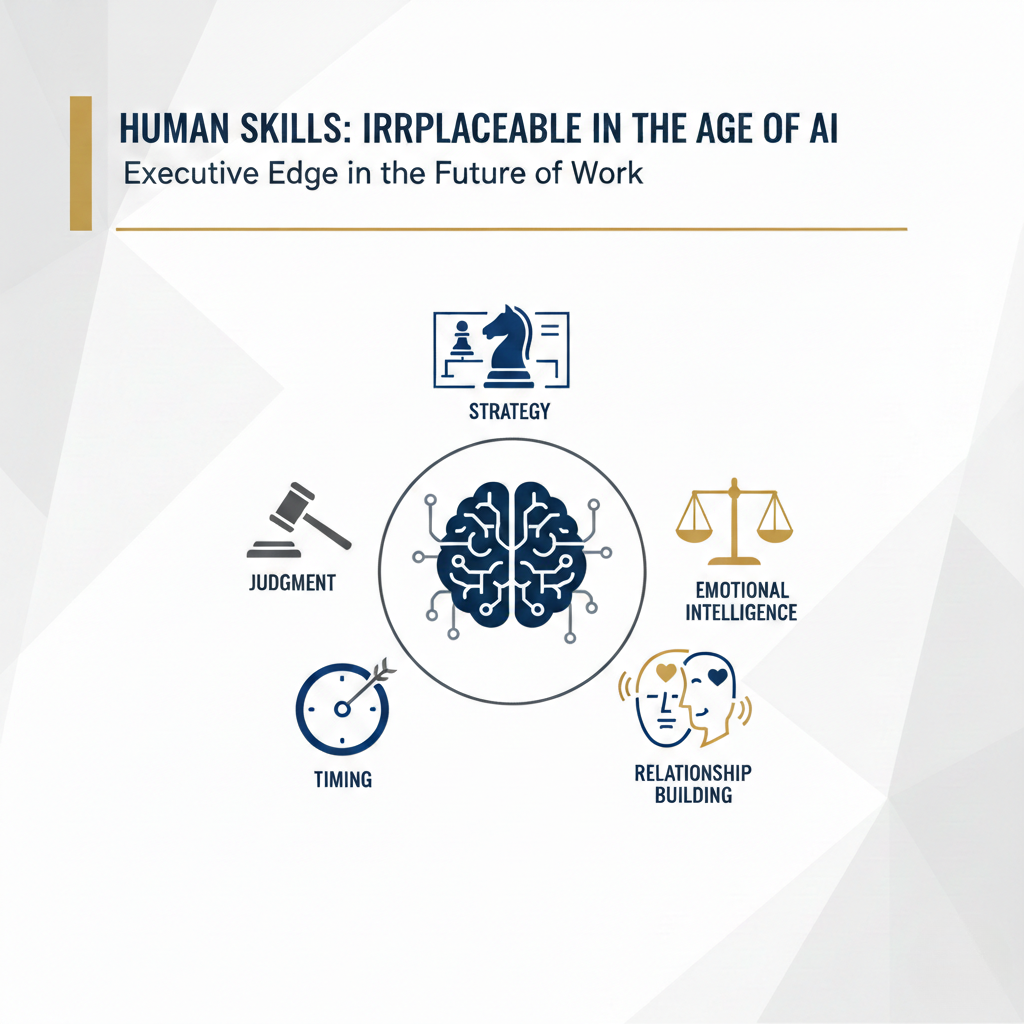
1. Strategy Can’t Be Automated
AI can optimize within a strategy.
It cannot define the strategy itself.
It can’t answer:
- Which accounts matter most?
- What should not be automated?
- When is outreach the wrong move?
Strategy requires:
- Trade-offs
- Context
- Judgment
And those remain human skills.
As Harvard Business Review notes, organizations that treat AI as a strategic assistant — not a replacement — consistently outperform those that chase automation alone (HBR, 2024).
2. Emotional Intelligence & Timing
Buying decisions are emotional.
AI can detect signals.
Humans interpret meaning.
A delayed reply.
A vague response.
A profile update.
These moments require intuition, not automation.
The best LinkedIn lead generators don’t just send messages.
They read the room.
3. Relationship-Building Over Transactions
AI excels at transactions.
Humans build relationships.
And relationships are what close:
- High-ticket deals
- Long sales cycles
- Retainers and partnerships
According to PwC, 73% of B2B buyers say trust is the primary factor in purchase decisions — more than price or features (PwC Global Trust Survey).
Trust is earned over time.
Not generated in a prompt.
The Future-Proof LinkedIn Lead Gen Framework
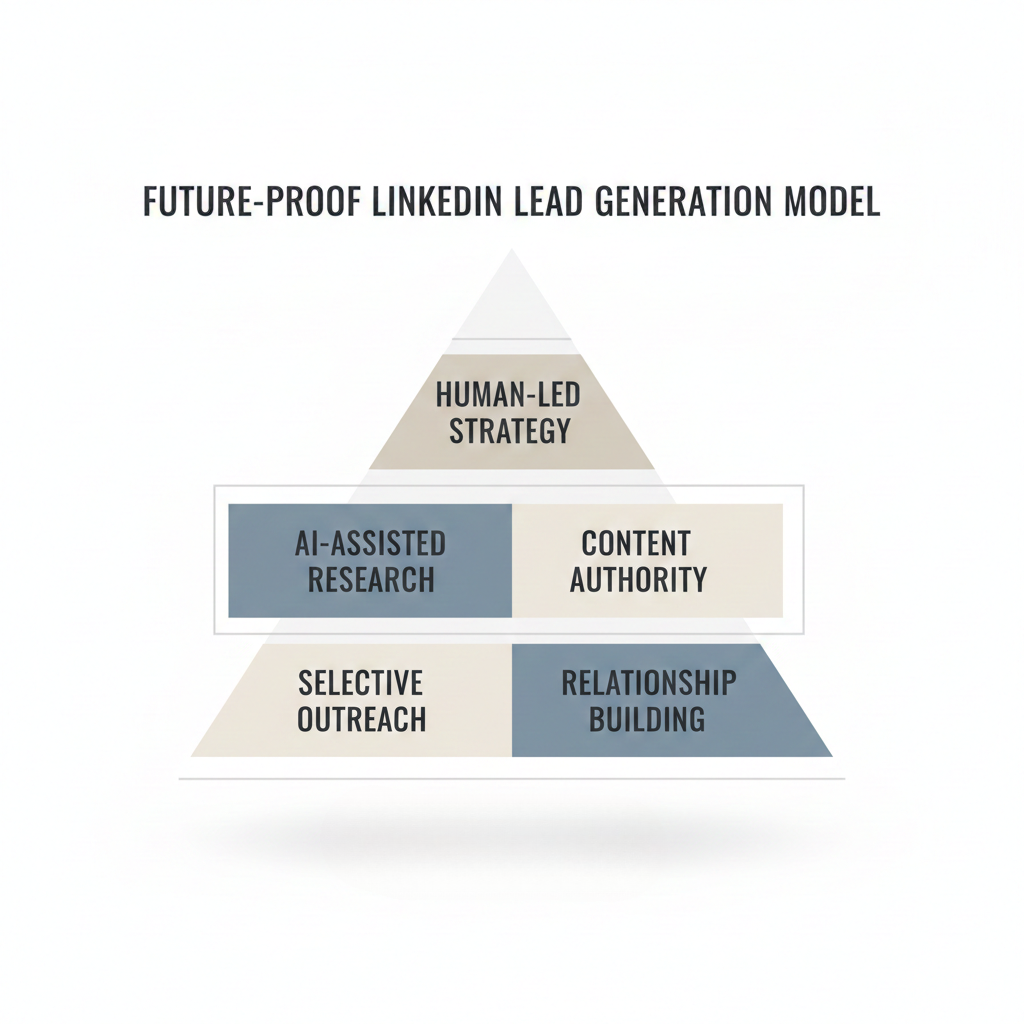
Here’s how modern agencies and teams should think:
- Human-led strategy
- AI-assisted research
- Content-driven authority
- Selective, insight-based outreach
- Relationship-first thinking
The winners won’t be those who send the most messages.
They’ll be the ones whose messages feel inevitable — because the market already knows who they are.
Final Thought
The future of LinkedIn lead generation isn’t about beating AI.
It’s about outgrowing it.
AI will level the playing field.
Strategy will tilt it.
And authority will decide who wins.
What This Means for Your LinkedIn Lead Generation
If your LinkedIn lead gen strategy still relies on:
- Templates that “used to work”
- Volume instead of positioning
- Automation without a clear point of view
At our agency, we don’t compete on:
- Number of messages sent
- AI tools used
- Or how clever our prompts are
We compete on strategy, positioning, and outcomes.
How We Actually Help Our Clients
We help founders, CEOs, and growth leaders:
- Clarify their market positioning so outreach doesn’t feel cold
- Build authority on LinkedIn before the first message is ever sent
- Design human-first lead generation systems - done by real people, not AI.
- Generate high-intent conversations, not vanity metrics
Who This Is (and Isn’t) For
This approach is not for you if:
- You’re looking for shortcuts
- You expect AI to replace strategy
It is for you if:
- You want LinkedIn to become a predictable inbound + outbound channel
- You care about long-term brand equity, not quick hacks
- You sell a high-trust, high-consideration offer
If This Resonates
If you’re serious about future-proofing your LinkedIn lead generation:
- No templates
- No spray-and-pray
- No AI theater
Then let’s talk.
👉 Send me a message on LinkedIn
I’ll personally review your positioning and tell you:
- What’s working
- What’s holding you back
- And whether we’re a good fit to work together
No pitch.
No obligation.
Just clarity.
P.S. Share your thoughts on the article in the comments. Agree? Disagree? Your point of view?

Article by Hrach Ghazaryan
Published 30 Jan 2026